
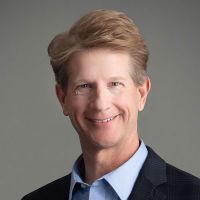
Lee Dresang, MD
The Wisconsin Academy of Family Physicians (WAFP) has selected Dr. Lee Dresang as its 2026 Family Physician of the Year, celebrating his decades‑long commitment to maternal and newborn care, rural health, community partnership, and training future family physicians. He will be recognized at the WAFP annual business meeting in Milwaukee on March 13.
For Dresang, the recognition is meaningful. “Serving as a family physician is incredibly fulfilling,” he says. “I am thankful every day for the relationships formed with patients, colleagues, and learners. To me, this award coming from the WAFP sends a comforting message of ‘we see you and support what you are doing.’ I will be accepting this award on behalf of my fabulous patients, coworkers, and wonderful family. To function effectively and happily as a family physician is a team effort.”
A Commitment to Excellence and Equity
Dresang’s career has centered on advancing health equity in both urban and rural settings. From 1998 to 2006, he practiced in an under‑resourced, largely Spanish‑speaking community on Milwaukee’s south side. Since 2006, he has served patients at the federally qualified health center (FQHC) UW Health Access Community Health Centers Wingra Family Medicine Center in Madison.
“I am committed to excellence and equity in health in urban and rural areas,” he says. “It has been amazing working at Wingra in an FQHC with a behavioral health team, social worker, addiction specialists, and Spanish speakers from the front desk to the exam room. We can offer the same care whether a patient is houseless and uninsured or a university professor.”
He also works to address disparities in infant mortality—an issue that disproportionately affects Black families in Wisconsin. Through his clinical care, research, community partnerships, and service on the Dane County Fetal Infant Mortality Review Committee, Dresang contributes to ongoing efforts to eliminate these inequities.
His dedication to rural health has been equally strong. After completing a rural health fellowship, he began working in Mauston in 2009 and now provides obstetric and surgical coverage in both Mauston and Reedsburg. “With rural labor and delivery wards closing at an alarming rate, I am working with others to meet these increasing needs—not only through personal service but by helping create a rural family medicine obstetrics fellowship to grow the number of needed providers over time.”
Motivation Rooted in Relationships
Dresang’s day‑to‑day motivation comes from the deep relationships central to family medicine. “The most joyful and effective care I can provide is built upon relationships and continuity of care,” he says.
One example stands out. While preparing a talk for the Family Centered Pregnancy Care (FCPC) conference, he interviewed three patients—sisters‑in‑law from Honduras—whom he had cared for through pregnancy, delivery, and beyond. As he mapped their connections, he realized he is now the primary care provider for 28 members of their extended family. “It is an honor to follow people through joyful moments and tragedies,” he reflects.
Community engagement is also essential to his work. Dresang partners with UW Department of Family Medicine and Community Health (DFMCH) colleague Dr. Patricia Téllez‑Giron Salazar, participating in Spanish‑language radio programming and volunteering at her annual Latino Health Fair.
Leadership in Family Medicine Obstetrics
Dresang has played a significant role in national efforts to strengthen family medicine obstetrics (FMOB). He has served on the Advanced Life Support in Obstetrics (ALSO) advisory and editorial boards for two decades and has chaired the FCPC conference since 2016.
These roles, he says, reinforce one another. “My participation in national FMOB CME programs has helped me teach, support other faculty, and provide better patient care locally—and patient care locally has helped me better develop curricula, author, and edit through ALSO and FCPC.”
His commitment to prenatal ultrasound education traces back to 1998, when he attended a three‑day workshop in Los Angeles. The experience became a model for what he would later develop in Wisconsin. Building on that foundation, Dresang and colleagues created a three‑day prenatal ultrasound workshop in Madison that has been offered annually ever since. The course attracts not only local residents and faculty but also learners from across the country, from Alaska to Maine. Under his leadership, prenatal ultrasound capacity has expanded significantly within DFMCH, with each residency clinic—and many community clinics—now equipped with faculty and residents who perform, teach, and continually develop this essential pregnancy‑care skill.
His work with ALSO, Global ALSO, basic life support in obstetrics, and prenatal ultrasound training has helped prepare clinicians across the world to manage obstetrical emergencies and deliver safe, effective care. “ALSO was born at the University of Wisconsin in 1991, especially targeting rural FMOBs,” he notes. “I’m proud to have helped usher it from infancy to adulthood.”
He considers the rural FMOB fellowship he helped create—with the support of departmental leaders, colleagues, rural partners, funders and countless others—a professional highpoint. “I am humbled and grateful to be given the opportunity to work with this fellowship team,” he says. “Co‑directing the rural FMOB fellowship is an unforeseen highlight of my career. I hope it will be a long‑standing pipeline supplying rural Wisconsin with the workforce it urgently needs.”
A Global Lens, Applied Locally
Dresang’s approach to patient care is shaped by his international background. He speaks Spanish and has participated in numerous global health and ALSO‑related trips across Latin America and beyond. He also lived in Kenya and Zambia as a child, spent his junior year of college studying the Hungarian health system, and completed additional international training.
“I try to learn from my patients’ lives in Wisconsin and around the world and how they are interconnected,” he says. “There is wisdom in the adage ‘think globally, act locally’—and its converse. We live in a very interconnected world.”
Looking Ahead: Hope for the Future of Family Medicine
One of the most hopeful developments Dresang sees is the rapid growth of FMOB fellowships nationwide. “There were 29 FMOB fellowships in 2014; there are 61 today,” he says. “Family physicians with surgical training are exactly what is needed to address the rural pregnancy‑care crisis. FMOB fellowships can help reverse this tide.”
As he prepares to accept the WAFP Family Physician of the Year Award, Dresang reflects on the continuity and purpose that have shaped his work. “I am thankful every day,” he says. “This award affirms not just my own path, but the collaborative effort it takes to care for patients, families, and communities.”
Published: March 2026