
What makes a good idea? That question set the tone for the 2025 Renner-Hansen Awards, which honored innovation and contributions to family medicine. Held in November at the Monona Terrace Convention Center, the event offered an opportunity to celebrate the Wisconsin Idea and the people whose work has made a lasting impact on the state and beyond.
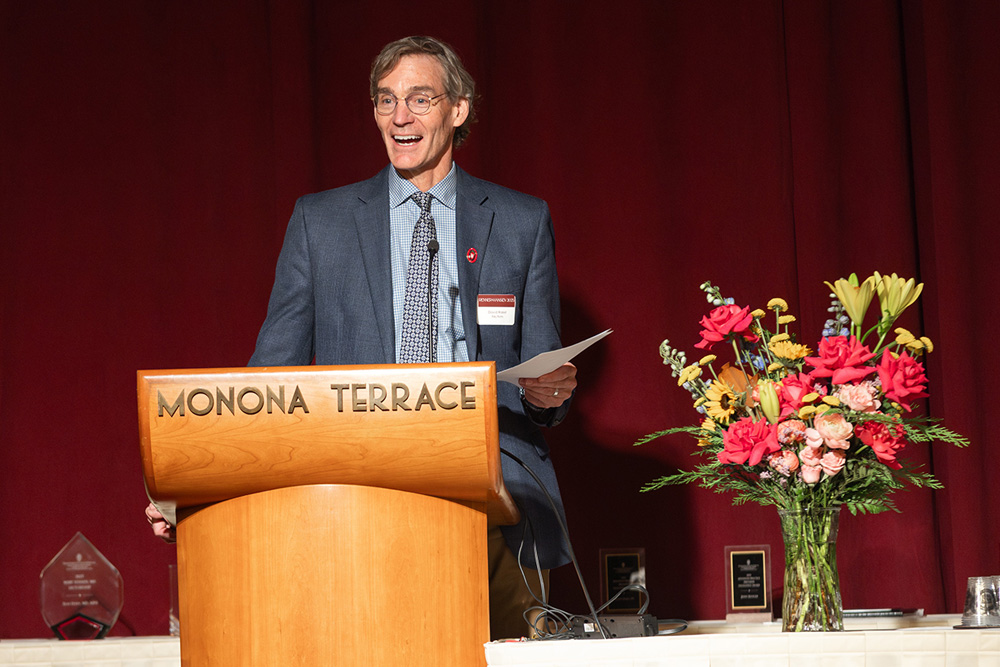
Dr. Dave Rakel, chair of DFMCH, welcomes attendees at the 2025 Renner-Hansen Awards.
Department of Family Medicine and Community Health (DFMCH) Chair Dave Rakel opened the evening with a remembrance of Dr. Marc Hansen, who passed away in February at the age of 92. “This year’s gathering carries special meaning as we honor the memory of Dr. Marc Hansen, often regarded as the father of our department, and a beloved friend, colleague, and mentor,” Rakel said.
In honoring Hansen and John H. Renner, the department’s first chair, Rakel explained how the Wisconsin Idea has evolved—emphasizing the importance of listening first to community needs before applying science to achieve the best outcomes. “This shift reflects the importance of engagement, humility, and partnership in modern health care,” he noted.
This year’s John H. Renner Wisconsin Idea Award recipient, Dr. Lou Sanner, has led initiatives that have profoundly influenced Wisconsin and beyond. “He has educated hundreds of physicians, influenced thousands through sustainable program development, and touched countless lives with his warmth and dedication,” Rakel added.
John H. Renner, MD, Wisconsin Idea Award: Lou Sanner, MD, MSPH
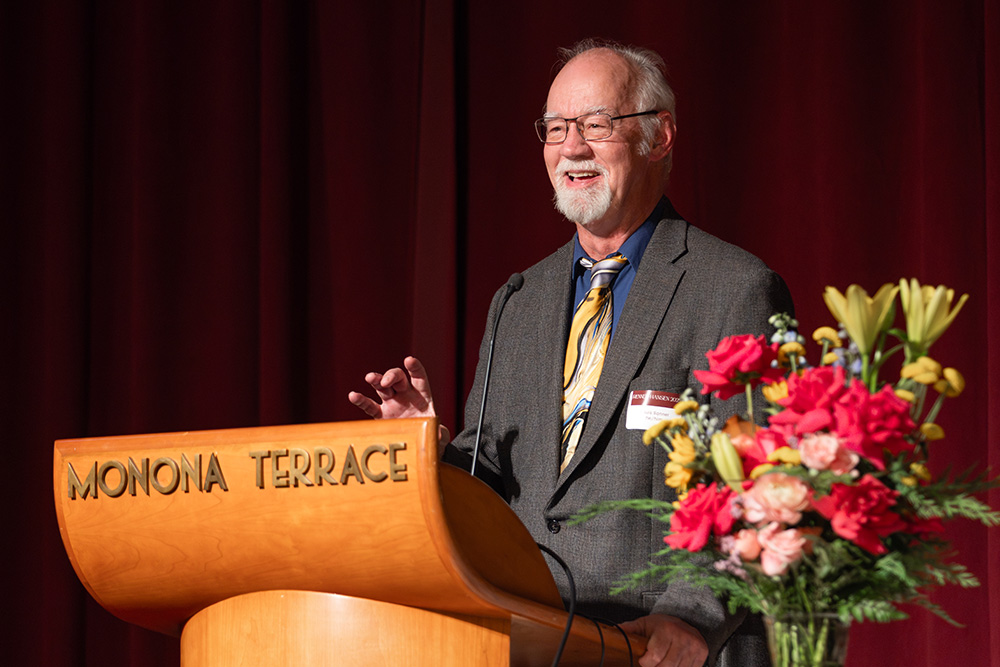
Dr. Lou Sanner accepts the John H. Renner Wisconsin Idea Award.
Sanner served as Madison residency program director from 1996-2002. He has consulted nationally to develop family medicine residencies—particularly in rural and underserved areas—taught advanced life support in obstetrics internationally and expanded graduate medical education in Madison and across Wisconsin. He also co-founded the Rural Training Track in Belleville and the Rural Health Equity Track.
In his remarks, Sanner reminded the audience that a good idea should solve a real problem, avoid causing harm, be innovative and energizing, and remain economically, socially, and politically viable over time. Something he discovered on his own journey, growing up in Chicago, and discovering the rewards of rural health care during his residency in Missouri.
Sanner compared the evolution of American democracy to the evolution of health care ideas. “The Declaration of Independence was a bold idea, the Constitution an improvement, and the Bill of Rights a refinement,” he said. “Similarly, health care must continually adapt, reexamine, and improve through collective effort.”
He highlighted that progress is rarely the work of one person but rather the result of collaboration and shared values. “Have good ideas. Share them. Work with others. Together, we are unstoppable,” Sanner concluded.
Marc Hansen, MD, Lecture: Sean Duffy, MD, MPH
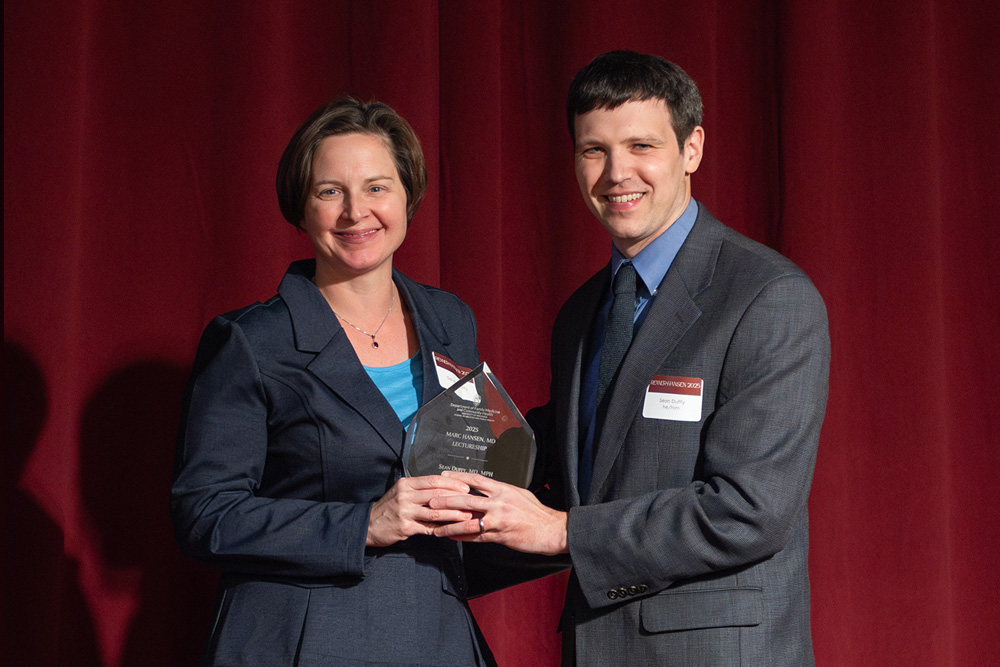
Dr. Sean Duffy (right) receives a commemorative plaque from Dr. Ildi Martonffy, vice chair of education, following his Marc Hansen Lecture.
Dr. Sean Duffy was introduced as a colleague known for his humility, dedication, and deep commitment to community partnership. His work spans both Madison and Guatemala, where he has consistently approached global health not as an outsider imposing solutions but as a collaborator listening to community needs and building programs together.
His path into global health began with a high school trip to Mexico, sparking a love for Latin American culture and language. A service-learning to trip to Guatemala during residency deepened his commitment, and he was invited by Dr. James Svenson to help develop a rural diabetes program led by community health workers using smartphone technology. This project became his fellowship focus, producing significant improvements in diabetes control in rural Guatemala. Building on that success, he continued to work with Svenson and collaborators at Stanford University to expand the model to cervical cancer screening and hypertension management.
Duffy highlighted the many ways DFMCH faculty and residents have advanced global health with efforts in Guatemala, Belize, Honduras, Mexico, India, Ecuador, Uganda, Ethiopia, Pakistan, and China. With recent challenges to global health funding, he urged the audience to advocate, support local initiatives such as Madison’s South Side student clinics serving immigrant populations, contribute to charitable giving campaigns including Global Impact, participate in departmental global health trips and collaborations, and promote equitable partnerships with colleagues in the Global South.
“Global health is not about imposing solutions but about listening, collaborating, and building capacity together,” Duffy said.
The evening concluded with the presentation of several other honors for excellence in service and research.
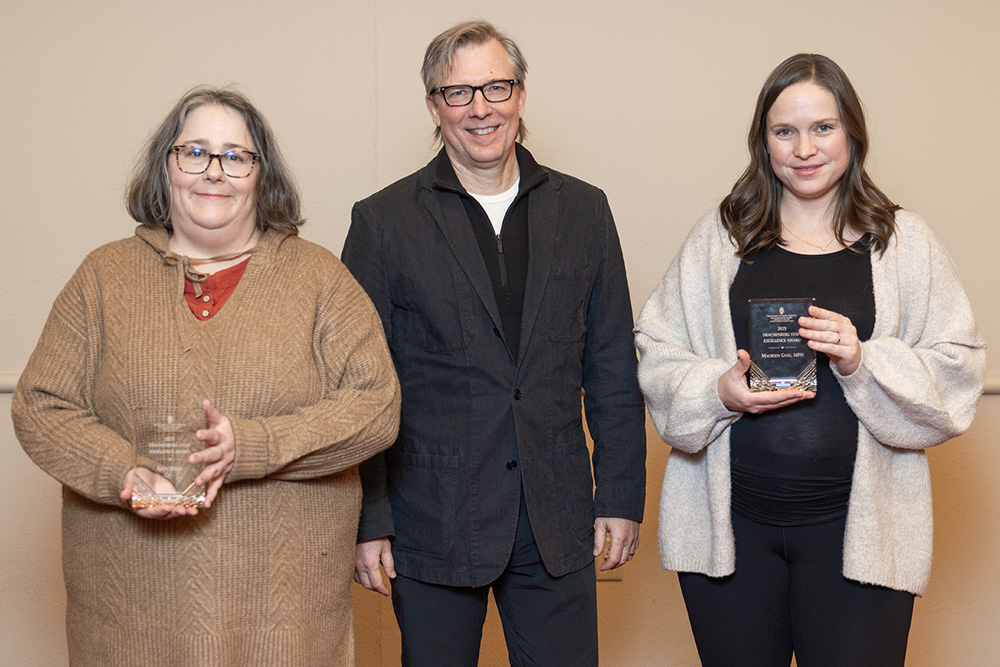
Randall Ballwahn (center) with Robert Drachenberg Staff Excellence Award winners Katy Bixby (left) and Maureen Goss, MPH (right).
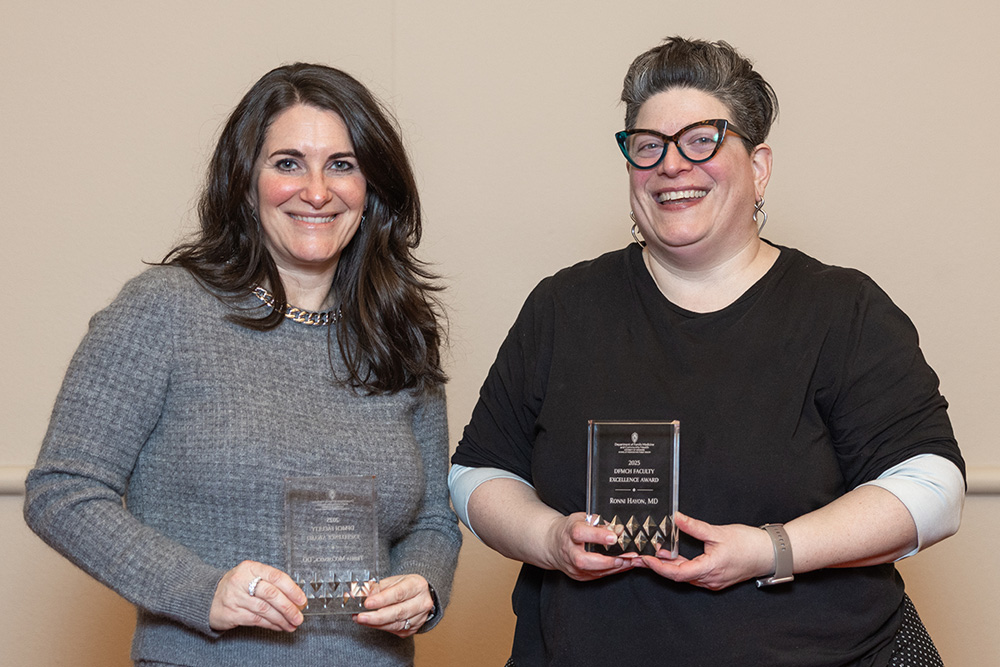
DFMCH Faculty Excellence Award winners Trisha McCormick, DO (left), and Ronni Hayon, MD.
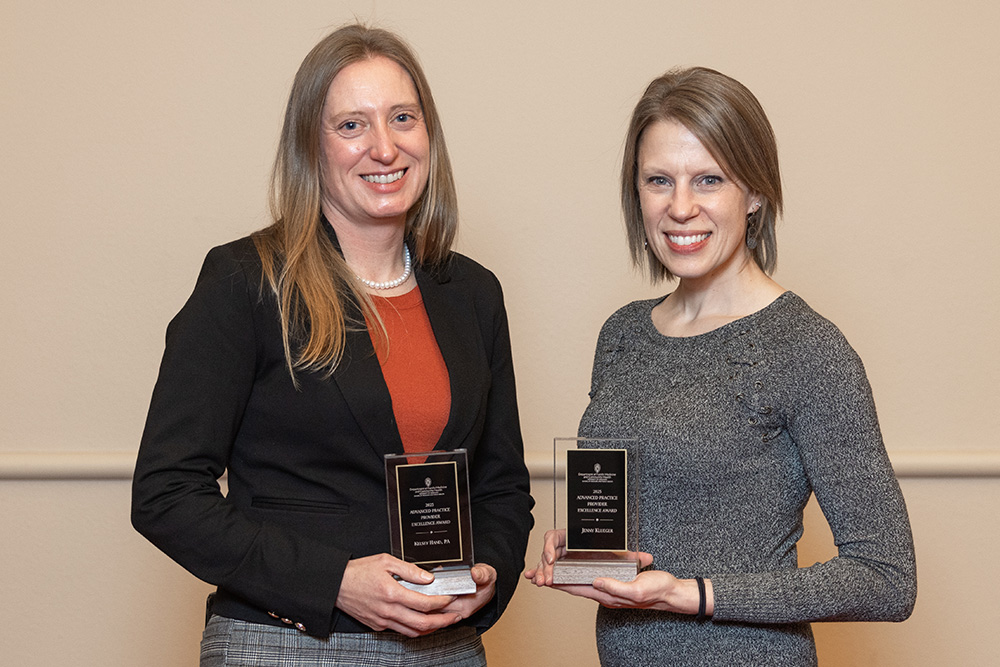
DFMCH Advanced Practice Provider Excellence Award Winners Kelsey Hand, PA (left), and Jenny Klueger, PA.
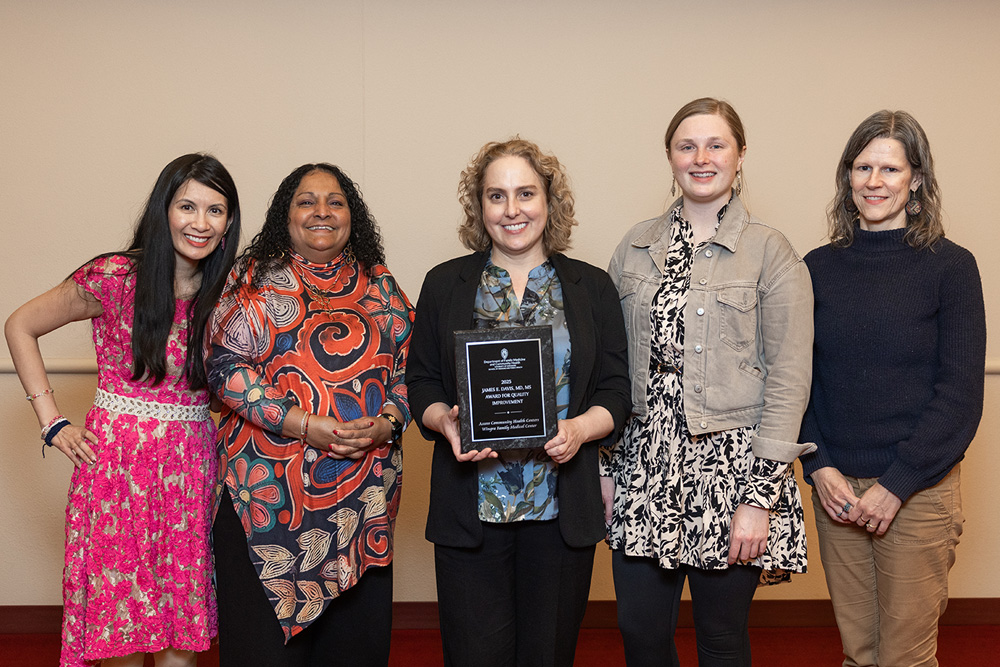
James Davis, MD, MS, Quality Improvement Award winners representing the Wingra Family Medical Center. From left: Yohualli Anaya, MD, MPH; Patricia Tellez-Girón Salazar, MD; Stacy Leidel, PhD, APNP; Kimberley Krawzak, MD; and Jennifer Lochner, MD.
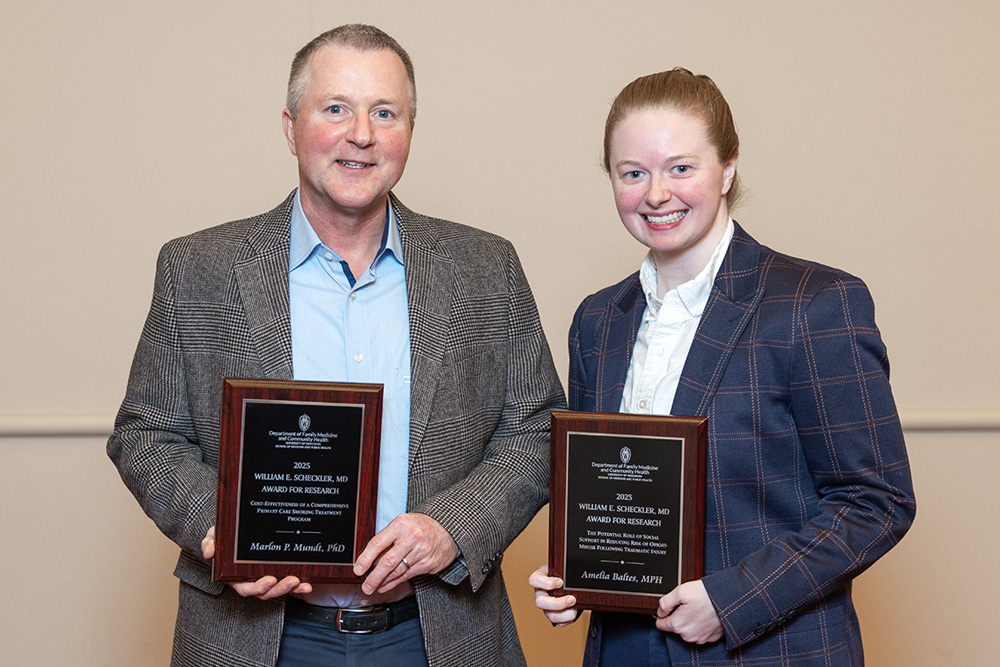
William Scheckler, MD, Research Awards winners Marlon Mundt, PhD (left), and Amelia Baltes, MPH.
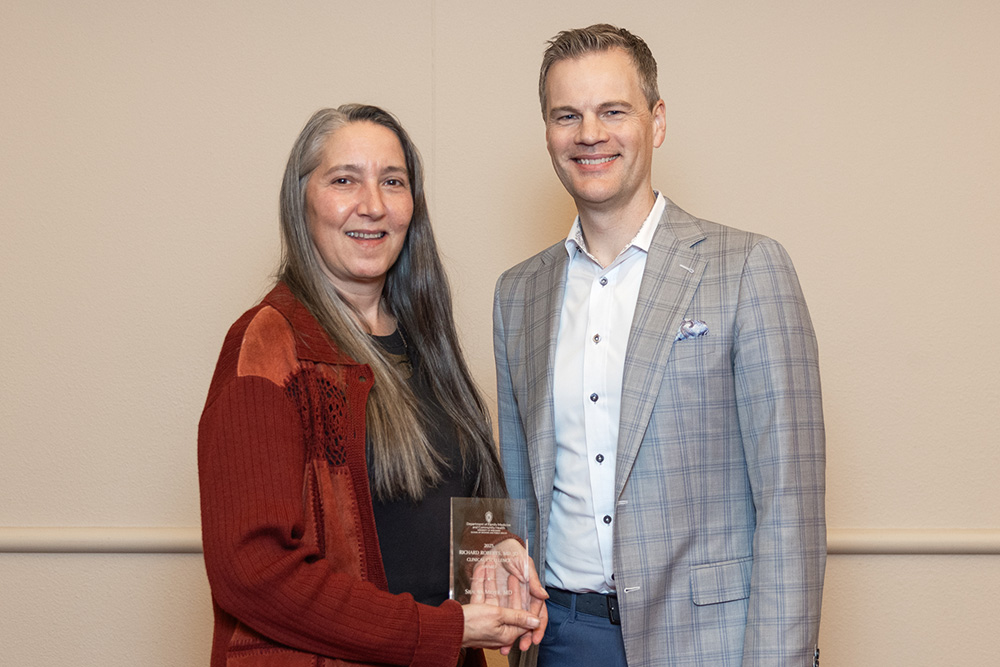
Richard Roberts, MD, JD, Clinical Excellence Award winner Shauna Meyer, MD (left), with Russell Lemmon, DO, vice chair of clinical care.
More Event Photos
On Facebook: https://www.facebook.com/media/set/?set=a.1545200930323062
Published: December 2025