
In the last decade, two words have reshaped the mission of a department committed to not only improving individual health across Wisconsin but also strengthening the neighborhoods, towns, villages, and cities where people live. In 2015, the University of Wisconsin Department of Family Medicine officially became the Department of Family Medicine and Community Health (DFMCH). Ten years later, with an established Office of Community Health (OCH), DFMCH continues to build and sustain meaningful relationships among community partners, family physicians, and researchers.
From Family Medicine to Community Health
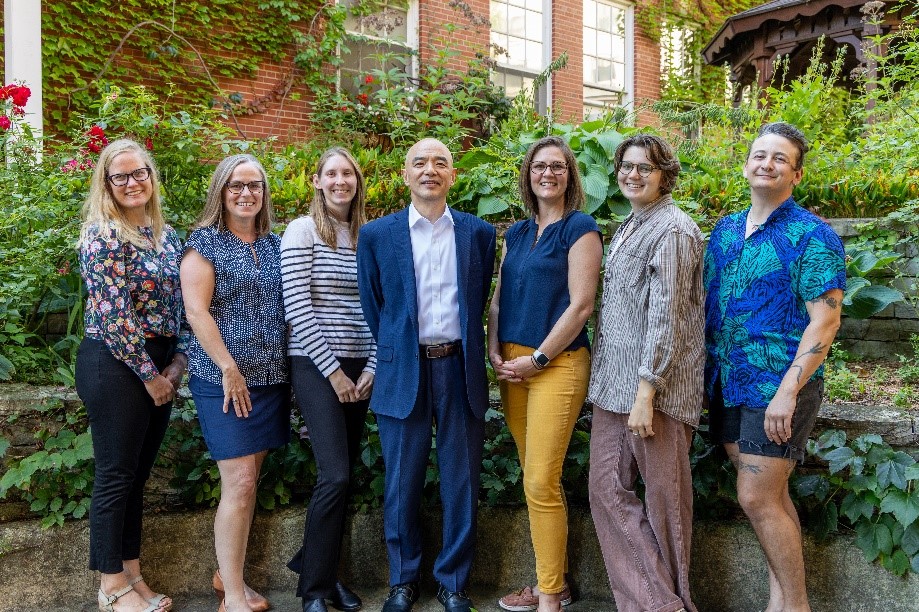
Office of Community Health team (from left): Sarah Hohl, Shelly Shaw, Joscelin Eberle, Dejun Su, Erika Anna, Hazel Behling, and Mo Overby.
Founded in 1970, DFMCH is recognized as one of the first family medicine departments in the country. The specialty has long attracted progressive physicians interested in understanding not only the health of individual patients but also the well-being of their families and communities. Department founder Dr. Marc Hansen envisioned comprehensive care teams that integrated multiple specialties and services—a step that shaped the department’s collaborative spirit. In 2015, that collaborative approach expanded beyond clinic walls and into the communities where patients live.
Dr. Valerie Gilchrist, who served as department chair during this transition, recalls that the idea had been circulating even before her arrival. She credits a Health Resources and Services Administration grant with helping to bring the vision to life. “We submitted and were successful in receiving the grant focused on developing community integration,” she says. “The name change was to recognize the critical role community plays in our patients’ lives and within our department.”
Gilchrist ensured the department’s name change was more than symbolic by partnering with former chair Dr. John Frey and former vice chair Dr. Jennifer Edgoose to establish and fund the Office of Community Health. The office’s first co-directors were Dr. Kirsten Abramson and Robin Lankton, who now serves as president of the UW Health Accountable Care Organization. In 2022, OCH expanded further with the creation of a vice chair of community health role, which Edgoose held until 2024.
“Today, many aspects of departmental planning—including funding decisions, educational initiatives, and research opportunities—strive to incorporate a deliberate consideration of community impact and engagement,” Gilchrist notes.
Building the Office of Community Health
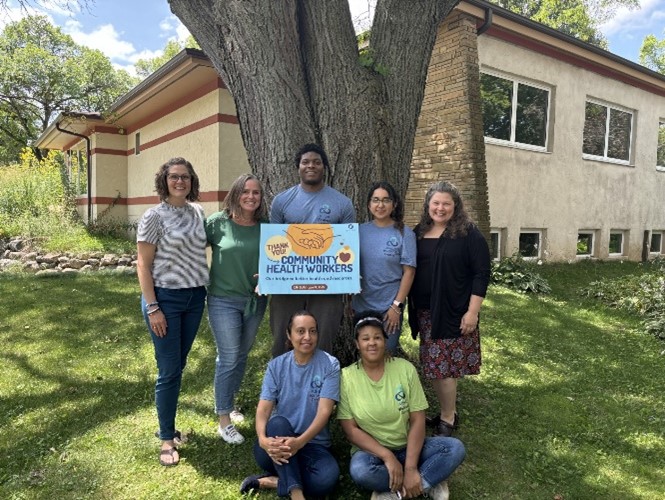
Community health workers from the Allied, Belmar, and Dunn’s Marsh neighborhoods with Erika Anna, Shelly Shaw, and Greta Kuphal, medical director of the Osher Center for Integrative Health, at the Allied Wellness Center in Madison. Top row, from left: Anna, Shaw, Auston-James Brown-Cox, Jennifer Gomez Flores, and Kuphal. Bottom row, from left: Victoria Cisneros and LaToya McMurray.
Since 2018, OCH Director Shelly Shaw has helped grow DFMCH’s internal capacity to build trusting partnerships and opportunities for community engagement. She’s done this by assembling a group that has grown from one part-time position to a team of six, including a lead research scientist, three community health coordinators, and an administrative specialist. Under Shaw’s leadership and with the full support of DFMCH Chair Dr. David Rakel, OCH has expanded its focus beyond resident education. “The expansion to include community health was an important progression that recognizes the interconnectedness of individuals, families, communities and the planet,” Rakel shares. “Salutogenic science requires this visionary breadth.”
This growth has strengthened efforts to integrate community expertise into departmental work, including access to advisory boards such as Community Advisors on Research and Design Strategy (CARDS) and the creation of patient-family advisory councils within residency programs.
“Beyond the department, OCH continues the long work to build trust with community organizations across Wisconsin, not only bringing community perspectives to patient care, but working with those partners to ensure that the environment we live in supports health,” Shaw adds. “Current outreach initiatives address key areas such as rural health, LGBTQ+ health, food and nutrition security, and the role of community health workers—ensuring that diverse perspectives guide the future of family medicine.”
Partnerships That Strengthen Communities
One example of community health in action is a project called Advancing Whole Health with the Wisdom of Communities. Whole Health is about helping people live well by connecting care to what matters most to them. It recognizes health is shaped not only by medical care but also by people’s surroundings, relationships, and daily habits.
In this project, OCH, the Osher Center for Integrative Health at the University of Wisconsin—Madison, and the Allied Wellness Center—an organization of community health workers (CHWs) that supports mental, physical, and spiritual well-being of residents in Madison’s Allied, Belman, and Dunn’s Marsh neighborhoods—work together to adapt a Whole Health curriculum. CHWs adjust the program so it reflects the real-life experiences and cultures of their communities.
“Working with the Department of Family Medicine and Community Health and sharing experiences has been enriching for me and has helped me gain a broader perspective on the work we do with the community,” says Victoria Cisneros, a community health worker with the Allied Wellness Center. “I believe that through our collaboration, we have complemented one another through our experiences, which have helped us see from different perspectives what it’s like to live in a community, to be part of vulnerable communities, and to share the realities of life that perhaps others cannot see. That’s what makes this partnership so important to me, and it fills me with hope that this project will help us bring strategies, knowledge, and tools that will help people have a better quality of life.”
By helping CHWs strengthen their own self-care and group leadership skills, the project builds healthier communities by learning directly from those who know them best. Careful evaluation of partnership quality, trust-building, and CHW growth shows how this approach can support community health leadership while staying responsive to local needs.
OCH Administrative Specialist Joscelin Eberle emphasizes the importance of meeting people where they are. “We talk about this a lot in our office,” she shares. “Showing up without an agenda and simply listening to needs is a crucial step to build these relationships that can then lead to meaningful projects that benefit the community.”
Listening, Learning, and Leading
In August 2025, Dr. Dejun Su became the vice chair of community health. His goal is to create and put into practice proven strategies that bring social support into primary care, so patients, especially those with the greatest needs, can have better health outcomes.
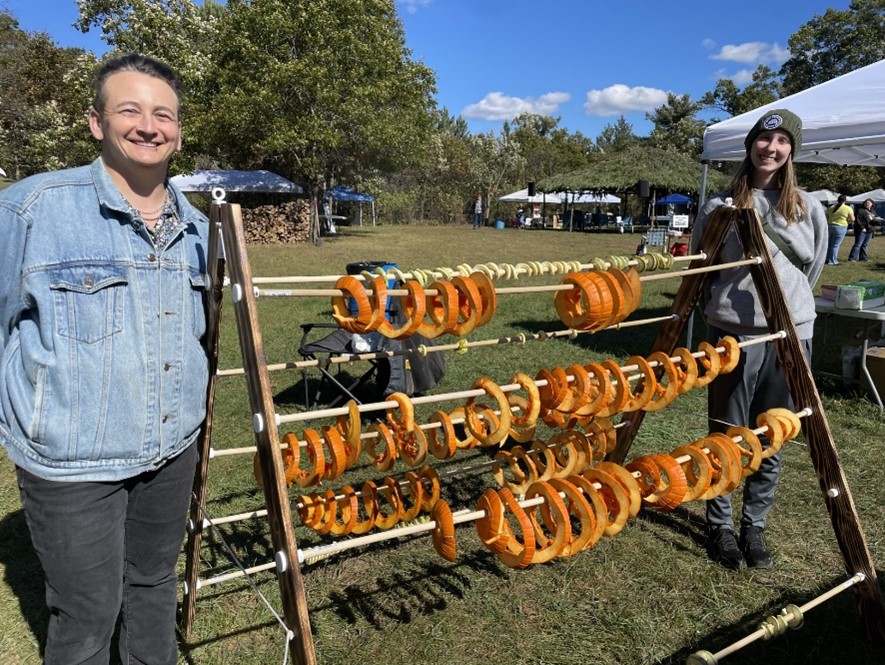
Mo Overby (left) and Joscelin Eberle meet Wisconsin community members by participating in events such as the 2025 Ho-Chunk Nation Green Corn Festival in Black River Falls. Here, they demonstrate traditional drying practices.
“Accomplishing this challenging goal requires close, substantive partnerships between our health care systems and local communities that can overcome the organizational, logistical, financial, and legal barriers,” Su says. “There is a need for us to develop demonstration projects to establish the feasibility and value of this goal in various clinical and community settings.”
In September, OCH surveyed DFMCH faculty, staff, and residents about what’s working well and where improvements are needed. People said the office’s biggest strengths are trusted partnerships, strong research expertise, and active involvement from learners. They also saw room to grow by working more across different fields, creating signature community health programs, and making OCH’s work more visible inside and outside the department. These ideas are now guiding OCH’s new strategic plan.
As DFMCH looks to the future, its commitment to community health remains strong. By fostering partnerships and working to integrate community voices into decision-making, the department continues to redefine what it means to care for the whole person and the community. OCH drives that mission, looking beyond individual patient care to co-create communities where the healthy choice is the easy choice.
Published: December 2025