
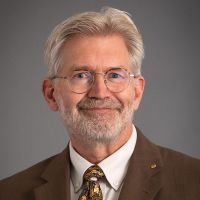
Jonathan Temte, MD, PhD
For more than three decades, Dr. Jonathan Temte has been a guiding force in family medicine, public health, and community engagement in Wisconsin and beyond. This month, his lifelong dedication will be recognized with the Lifetime Achievement Award from the Wisconsin Academy of Family Physicians (WAFP). The award will be presented at the organization’s annual business meeting in Milwaukee on March 13, 2026.
For Temte, the honor is both personal and shared. “This is a wonderful recognition but also underscores all the tireless efforts made by Wisconsin family docs every day for which they do not receive recognition,” he says. “I’ve been lucky to have a career that involves higher profile public health initiatives such as state and national immunization policy, responses to bioterrorism and the COVID-19 pandemic, and influenza and respiratory surveillance. I hope that I have been able to model the obvious alignment of primary care medicine and public health practice.”
A Career Shaped by Inquiry and Service
Temte joined the University of Wisconsin Department of Family Medicine and Community Health in 1993, beginning a distinguished career as a clinician, researcher, educator, and public health leader. Now a professor of family medicine and the associate dean for public health and community engagement at the UW School of Medicine and Public Health, he has influenced generations of family physicians and contributed significantly to the science behind preventive medicine.
His path into medicine was unique. “I am a biologist at heart. That part never leaves,” he says. He remains a charter member of the Society for Marine Mammalogy and still has “a fondness for seals.” His movement from oceanography to medicine, as he describes it, “was saltatory,” shaped by a combination of academic shifts, family needs in Wisconsin, inspiration from a friend pursuing medicine, and strong MCAT scores. An MD/PhD scholarship brought him back to Oregon to complete his MS before he returned to Madison to finish medical school; a family medicine rotation in Stoughton, mentored by fellow WAFP Lifetime Achievement award recipient Dr. John Beasley; and his PhD in zoology. He finished his residency and PhD a week apart in 1993, cementing the blend of ecology, epidemiology, and primary care that would guide his career.
Leading Through Uncertainty
Temte’s leadership during the COVID‑19 pandemic stands among his most visible contributions. He offered clear, science‑based guidance to clinicians, policymakers, schools, and families. Before that, his ORCHARDS study, which monitored respiratory symptoms among school‑aged children, provided important insights into disease transmission long before the pandemic.
Two early-career moments helped set the direction for his work in infectious disease and public health. In his first days at Wingra Clinic, he met a medical student seeking answers about what caused his aseptic meningitis. “I answered that I had not a clue, but I would try to find out.” That question led him to the Wisconsin State Laboratory of Hygiene and to a long partnership with Dr. Peter Shult focused on respiratory surveillance in primary care.
Soon after, a two‑year American Academy of Family Physicians (AAFP) Advanced Research Training Grant broadened his research foundations. At the 2000 CDC Measles Elimination Meeting, he remembers being “blown away by molecular epidemiology” and introduced to “the power of vaccination”—a moment that influenced more than two decades of work in immunization policy. Temte later served as liaison and voting member of the Advisory Committee on Immunization Practices, chairing the group from 2012 to 2015. He now leads the Wisconsin Council on Immunization Practices.
A Leader and Mentor in Wisconsin and Beyond
In Wisconsin, Temte has long championed primary care research. He directed the Wisconsin Research and Education Network from 2000 to 2005, building strong partnerships between clinics and communities. His teaching and leadership have earned multiple honors, including the AAFP Public Health Award, the UW Health Clinical Leadership Excellence Award, and the AAFP Exemplary Teaching Award.
When asked which mentoring moment he values most, Temte says he cannot choose just one. “One never knows if a connection is made,” he says. “I can only hope that I had a small part in helping to shape good family docs, good researchers, good public health practitioners, and good people.” He offers a recent example: working via Zoom with the high‑school‑aged son of a former Wingra physician assistant who became a family medicine resident. Together, they conducted a study, analyzed data, presented at the North American Primary Care Research Group annual meeting, and wrote a manuscript. “He has now been accepted at Washington University,” Temte says.
The Evolving Role of the Family Physician
As health care becomes more digital, Temte sees both benefits and challenges. “My career spans handwritten, dictated, and electronic records, and there are drawbacks and benefits to all,” he says. Still, he believes the core skills of family medicine have not changed. “They are the soft skills of relationships, of understanding, listening, and translating medical concepts into human terms. In essence, they are the skills of storytelling and sense-making.”
For early‑career physicians who want to influence policy, his guidance is straightforward: stay grounded in patient care. “Policy is always in need of grounding. Family medicine provides insight on how medical interventions, approaches, and technologies can be applied to real people in real‑life situations.”
A Well‑Earned Honor
The WAFP reserves its Lifetime Achievement Award for individuals whose work leaves a lasting impact on the profession. From shaping national vaccine policy and mentoring future clinicians to advancing respiratory surveillance and serving as a trusted voice in times of crisis, Temte’s career reflects a deep commitment to the health of Wisconsin communities.
As he prepares to accept the award, colleagues across the state celebrate not only a remarkable career, but also a legacy built on curiosity, humility, and a belief in the human stories at the heart of medicine.
Published: March 2026