
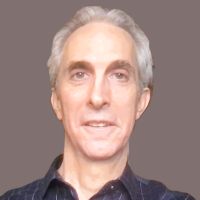
Dr. Paul Hunter recently stepped down after 15 years as director of the Acting Ambulatory Internship, a program that connected medical students with community-based physicians across Wisconsin.
After 15 years of leadership, Dr. Paul Hunter has stepped down as director of the Acting Ambulatory Internship (AAI), marking not only the end of his tenure but also a turning point for the program itself. The University of Wisconsin School of Medicine and Public Health has announced that it will sunset the AAI as a required course, closing a chapter in a program that has shaped generations of future physicians across Wisconsin.
The AAI has long been a required four-week experience for Phase 3 medical students, focusing primarily on outpatient care. At least half of the rotation takes place in outpatient settings, most often with family physicians in smaller communities across the state.
Beginning with the Class of 2028, students will complete additional clinical elective credits, allowing for more specialized and flexible training. Plans are underway to transition elements of the AAI into department-based electives, and community preceptors will be supported in continuing their teaching roles.
Returning to His Roots
Hunter traces his path to the AAI to a mix of mentorship and personal calling. He was inspired by Dr. Byron Crouse, founder of the Wisconsin Academy for Rural Medicine (WARM), when he first agreed to lead the AAI. At the time, he was teaching in Milwaukee but was eager to reconnect with the kind of practice that first drew him to family medicine. A graduate of the University of Wisconsin School of Medicine and Public Health who completed his residency in Eau Claire, Hunter had originally envisioned working in a small town.
“I like talking to different physicians in different situations,” he said. “And I like doing that in my job.”
A Program Built on Relationships
Central to Hunter’s leadership has been supporting the physicians who teach students in the field. His role, as he describes it, is not just to guide students but also to help physicians become effective educators.
“I teach the doctors how to teach the students,” he explained, noting that the program depends on strong partnerships with preceptors and site administrators.
Students receive regular feedback through weekly evaluations and check-in sessions, but much of the “magic,” Hunter said, happens in the apprenticeship model itself. Students work closely with physicians — often spending around 20 hours a week with a single doctor — gaining both autonomy and confidence as they prepare for residency.
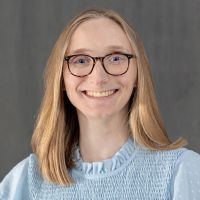
Dr. Helia Gagnon credits her Acting Ambulatory Internship experience with strengthening her confidence and reaffirming her commitment to family medicine.
The model left a lasting impression on recent UW School of Medicine and Public Health graduate Dr. Helia Gagnon. During her AAI rotation, she worked exclusively with a single outpatient family medicine preceptor, an experience she said accelerated both her confidence and clinical growth.
“My preceptor held me to a high standard and treated me fully as a new family medicine intern,” Gagnon said. Rather than providing step-by-step instructions, her preceptor encouraged her to research treatment options, propose next steps, and develop care plans independently. Although the responsibility felt intimidating at first, Gagnon said it strengthened her confidence and helped her retain knowledge more effectively.
Working with one physician over an extended period also allowed Gagnon to observe her own growth and build a stronger mentoring relationship, resulting in a recommendation letter that reflected both her clinical abilities and professional development.
Sustaining Connections Across Communities
The AAI has drawn on a broad network of teaching sites, many with long traditions of medical education. Communities such as Black River Falls, Hayward, Mauston, and Ashland have trained students for generations, reflecting more than a century of commitment to community-based teaching.
Hunter also helped expand the network, often with the help of students themselves. Encouraging students to connect the program with physicians from their hometowns led to new preceptors and creative housing solutions, sometimes supported by local families and institutions.
Maintaining such a far-reaching program has required constant communication. Hunter prioritized regular touchpoints, including individual meetings with new preceptors, monthly webinars between rotations, and biannual in-person and virtual check-ins.
These meetings often served as rare opportunities for physicians from different health systems to share experiences and discuss challenges, from clinical practice to burnout. Many preceptors are alumni, and participation offers a meaningful way to stay connected to the medical school and give back.
The program, Hunter emphasized, also depended on strong administrative support from the UW School of Medicine and Public Health.
A Lasting Impact on Students and Communities
For Hunter, one of the most rewarding aspects of the AAI has been hearing students reflect on their experiences at the end-of-rotation symposium.
Many discovered the breadth of what family physicians can do and gained a deeper appreciation for community-based care. Just as importantly, these experiences often left lasting impressions that shaped future career decisions.
Gagnon had already planned to pursue family medicine, but the experience reinforced her decision. She said that spending a month in a rural family medicine clinic allowed her to build relationships with returning patients and experience continuity of care in ways that traditional medical school rotations rarely permit.
“This experience completely alleviated any remaining doubts in my mind,” Gagnon said. “It prepared me to move forward with application season with full confidence.”
She added that the rotation helped her articulate her commitment to community-based care throughout the residency application process and deepened her understanding of family medicine’s role in addressing local health needs.
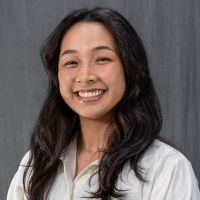
Dr. Hannah Ray said her community-based clinical experience helped her feel more open to practicing outside a major metropolitan area.
Dr. Hannah Ray, currently a resident in the UW Department of Family Medicine and Community Health (DFMCH), remembers her AAI placement in the Lake Geneva–Burlington area as an experience that broadened her perspective on where she might ultimately practice.
“I have always thought I wanted to practice in a larger city, but my experience working in a more rural area really challenged that idea,” Ray said. “Even now, as I look at potential jobs during residency, I feel more comfortable considering opportunities outside of the greater Madison area.”
Ray said the rotation highlighted the diversity of medical practice across Wisconsin and demonstrated how physicians’ experiences and approaches are shaped by the communities they serve.
“You teach 10 or 20 students over time, and you’ll get a family doctor out of it,” Hunter noted, pointing out that even indirect exposure can influence where physicians ultimately choose to practice.
Looking Ahead
Though he stepped away from the director role in June and the AAI itself is being phased out, Hunter hopes the program’s core values will continue in new forms.
While the formal requirement is ending, elements of the AAI will persist through department-based clinical electives. Programs such as WARM and TRIUMPH are expected to maintain requirements for outpatient-based advanced clinical experiences. Hunter also plans to support the transition, including involvement in a new AAI-like clinical elective in DFMCH.
He emphasized that the program’s value has never been measured in prestige or revenue, but rather in its impact on students, communities, and the profession as a whole.
Hunter also plans to remain involved in student symposia and continue teaching in areas such as chronic and preventive care. He also hopes to stay connected with the WARM program.
“It’s been a real joy to keep that thread connecting the medical school and communities across Wisconsin,” he said. “I hope to continue that by supporting the next generation of leaders.”
Published: July 2026