
Application Process: Apply online »
Applications open Jan 7, 2026
Preview of application (PDF).
Stipend: $4000 – $5000 ($500 per week)
Duration: 8-10 weeks starting May 18 (through July 10 to July 24, 2026)
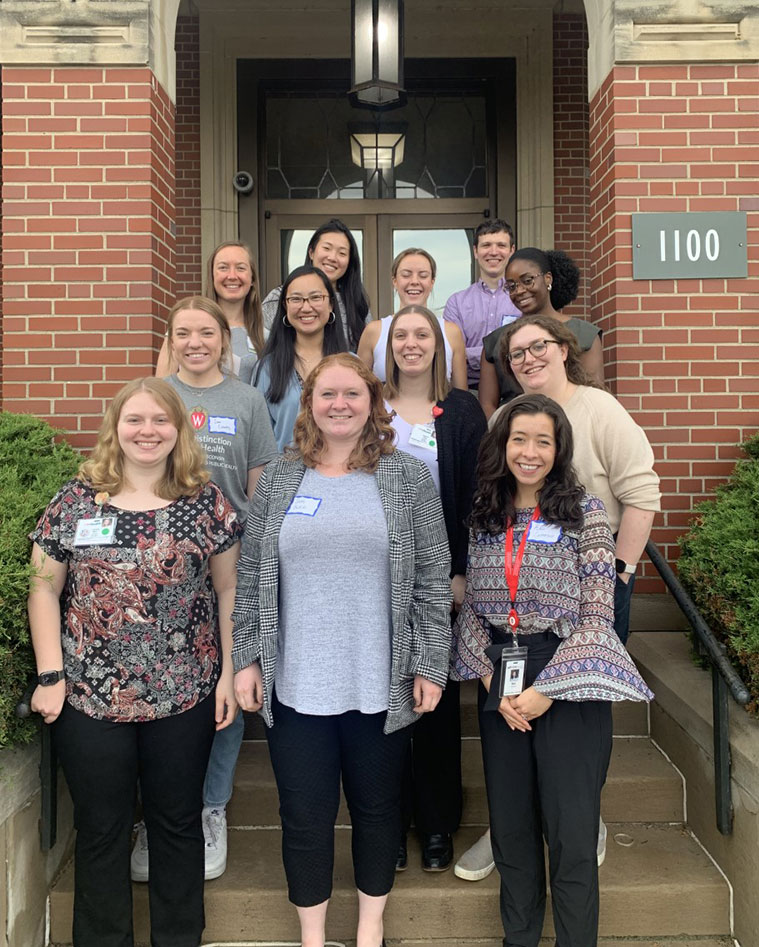
The Department of Family Medicine and Community Health (DFMCH) has numerous faculty who are eager to have UWSMPH medical students work with them on people-oriented, clinically relevant, hands-on research and quality improvement projects. Students have ample opportunities to see patients in a variety of settings (office, hospital, others), learn important research concepts and skills, and participate in social events with other faculty and students.
Schedule: This is a tentative schedule:
- May 18 – 20 — Work with faculty
- May 21/22 — Orientation seminar (at DFMCH or virtual)
- May 25 – June 18 — Work with faculty
- June 19 — Mid-point seminar (at DFMCH or virtual)
- June 22 – July 9 — Work with faculty
- July 13 — Final presentations (at DFMCH or virtual)
- July 14 – July 24 — Complete work with faculty (for those opting for 10-week assistantship)
Director: Sean Duffy, MD
Stipends: We have funding available to support up to 16 students at $500 per week for the 8-10 week session.
Please complete the online application, including your cover letter described at the bottom. As soon as your application is received, copies of your application will be sent to the faculty with whom you are interested in collaborating. The faculty members will contact you to set up interviews either in person or remotely. These interviews will allow faculty and students to determine whether there is mutual interest. Faculty and student matches should be considered binding on both parties unless significant, unforeseen circumstances occur. Since agreements between faculty and students may be made at any time, students who submit their applications early are more likely to have their choice of projects.
For additional information, please contact Sean Duffy at:
E-mail: sean.duffy@fammed.wisc.edu
2026 Research Projects
MATCHED
Investigator: Randall Brown, MD, PhD
Collaborators: Andrew Quanbeck, PhD; Shinye Kim; Rachel Grob, PhD
Location of study: Madison
Background information:
Over 2 million acute care hospitalizations annually in U.S. result from traumatic injuries, such as motor vehicle accidents, gunshot wounds, and stab wounds. Traumatic injuries that require hospitalization represent a potentially seminal event for prolonged opioid exposure and, hence, the development of opioid misuse and opioid use disorder (OUD). Care management and brief behavioral interventions may improve pain and pain related distress, and thereby decrease
rates of substance misuse in this population.
Primary Objective: Determine the feasibility of delivering an adaptive intervention, comprised of opioid risk monitoring, pain coping skills training, and RN care management, that may be tailored to pain-related distress and opioid misuse risk, to reduce pain-related impact and reduce substance misuse risk.
Specific Aim 1: Evaluate the feasibility of delivering the proposed adaptive intervention, as measured by rates of recruitment and retention at Weeks 4 and 12.
Specific Aim 2: Evaluate the potential acceptability of the adaptive intervention, as measured by descriptive self-report data (e.g., ATAQ, CSQ, AIM) from participants.
Explore intervention impact on pain and OUD risk.
What is the potential student role in the project, including clinical time?
Students will work with the research team in the screening of potentially eligible patients hospitalized for injury at UW Hospital, which includes contact w/ patients. They will attend lab meetings where this and other projects are discussed, to orient them to workflows, study conduct, measures etc.
Students will work clinically with addiction medicine faculty members on the inpatient consult service and in some of our outpatient addiction consult settings (Alcohol-associated liver disease clinic, HIV Clinic, Compass low-barrier clinic for opioid use disorder).
MATCHED
Investigator: Sarina Schrager, MD, MS / Lashika Yogendran, MD, MS
Location of study: Madison
Background information:
Our recent scoping review (a product of an SSRCA collaboration in 2024) found that people want to talk about colon cancer screening with their primary care providers (PCPs). (Yogendran) Patients also want a comprehensive list of potential harms and benefits of all available screening options including accuracy. Further, they wanted detailed descriptions of the process of each of the tests with a recognition of the fear of getting a colonoscopy. Colon cancer remains the 4th most common cancer diagnosed in the US and the 2nd most common cause of cancer death.
Colon cancer is being diagnosed more and more in younger people, triggering new recommendations for onset of screening at 45 (down from 50). Screening rates are suboptimal.
Yogendran L, Wakefield H, Christenson L, Schrager S. Shared decision making in colorectal cancer screening: a scoping review. JABFM 2025;38:635-60.
What is the potential student role in the project, including clinical time?
The student will review the literature, using the recent scoping review as a starting point. From this research, the student will develop informational materials for the patients and clinicians to use when discussing screening options. These materials will support shared decision making by clearly outlining the potential harms and benefits of each different screening modality and working to elicit each patient’s feelings about screening. If time permits, the student will then “test” the materials with a convenience sample of adults over 45 years of age at one Madison clinic for clarity and accuracy. The student will also be able to see patients with both of the PIs.
Additional comments
We will obtain IRB approval to ask patients to evaluate the materials.
MATCHED
Investigator: Patricia Tellez-Giron, MD
Location of study: Madison
Background information:
Hypertension, a significant risk factor for cardiovascular disease, requires effective management to reduce morbidity and mortality. While many patients benefit from treatment, others may struggle due to a lack of resources or understanding of the importance of blood pressure control. Building upon the success of previous initiatives, this project aims to further improve hypertension management by incorporating targeted health education and addressing social determinants of health. While, continuing previously successful blood pressure improvement control initiatives: Outreach calls to remind patients of needed follow up and also continuing increasing referrals to our pharmacy team for a hypertension protocol.
What is the potential student role in the project, including clinical time?
Students participating in this project will:
- Gain hands-on experience in quality improvement methodologies
- Contribute to project planning and implementation
- Assist with patient outreach calls, health education, and referrals
- Develop skills in hypertension management, lifestyle counseling, motivational interviewing, and addressing social determinants of health
- Collect and analyze qualitative feedback from patients
- Contribute with data analysis and publication
- Be able to create a poster and present at conferences if desire
- Participate in clinical sessions to observe and assist with patient care
Additional comments
Bilingual (Spanish/English) proficiency is preferred, but we encourage enthusiastic students of all language backgrounds to apply!
Students should be comfortable using EPIC and will be provided with a UW-MF computer. Most work can be completed remotely, with flexible hours. Students will receive training on project goals, standardized call scripts, HTN education and referrals sources for identified patients’ needs. They will also have opportunities to shadow mentors at Wingra Clinic.
This is an excellent opportunity to:
- Assist a clinic serving a diverse population
- Improve patient health and well-being
- Gain experience in public health, quality improvement, and social determinants of health
We look forward to your application!
Investigator: Estefan Beltran, MD / Morgan White, MD
Collaborators: Sarah D. Hohl, MPH, PhD; Hanna Helling; Office of Community Health
Location of study: Madison
Background information:
While many students enter medical school with early specialty interest, more than half (56%) of US medical students change their specialty choice between completion of 2nd year and graduation. Understanding the decision-making process behind specialty choice is important as some specialties struggle to attract applicants, fill residency positions, or achieve adequate representation across practice settings (urban/suburban/rural), gender, and/or race/ethnicity.
The Enhacing Representation to Improve our Community’s Health (EnRICH) program is a pathway program that supports students from underrepresented backgrounds and/or those interested in working with patients from underserved populations who are also planning to pursue Primary Care/Family Medicine as a specialty. This project aims to understand the current evaluation processes for other mentorship pathway programs and carry out qualitative data gathering to determine the effectiveness of EnRICH. Data obtained from this project will help inform changes in future programming.
What is the potential student role in the project, including clinical time?
Anticipated roles of SSRA students include assisting with a literature review of current evaluation processes of other pathway programs, developing/carrying out qualitative interviews for graduating EnRICH medical students, and analyzing the subsequent data. Students will work with Family Medicine faculty, residents, and researchers from the Office of Community Health to gain experience in both quantatitive and qualitative data collection and analysis. Primary
clinical opportunities will be at Wingra Family Medical Center, a Federally Qualified Health Center and Residency Clinic that boasts a diverse patient population. Care provided at Wingra is strong in full spectrum Family Medicine including community medicine, prenatal care, immigrant/refugee health, and LGBTQ care. There may also be opportunities to participate in inpatient adult/peds and OB Family medicine services pending scheduling.
Investigator: Diana Carvajal, MD
Location of study: Madison
Background information:
Patient-centered care is “respectful of, and responsive to, individual patient preferences, needs, and values and ensuring that patient values guide all clinical decisions”—is key to high quality, equitable health services, including contraceptive services. Patient-centered contraceptive care (PCCC) helps patients achieve their reproductive goals, facilitates autonomy, builds trust, and increases satisfaction.
However, contraceptive counseling is often not patient-centered for Latina/e patients, the largest racial/ethnic minority group in the US and Wisconsin. Latina/e patients experience discrimination in contraceptive care, and encounter coercion to use contraception and pressure to limit family size. Clinicians’ (in)ability to provide PCCC to Latina/e patients is due to both system-level factors, such as visit time constraints and health system discrimination, and clinicianlevelfactors, including patient–clinician language discordance and lack of cultural humility. Tools to support clinicians’ provision of PCCC could be an addressable way to overcome barriers, but they are lacking to date.
What is the potential student role in the project, including clinical time?
To increase PCCC for Latina/e patients in Madison, we will vet a prototypical, clinician-facing, contraceptive-care tool designed to facilitate the delivery of equitable contraceptive counseling.
Aims:
1. Develop and pilot a point-of-care tool as a mobile application (app) for clinical use. We will convert the prototype to a smartphone app and will adapt the tool based on results of cognitive interviews and usability and acceptability surveys with clinicians.
2. Evaluate the app’s effectiveness using quasi-experimental methods. Using patient surveys and select patient interviews and clinician interviews, we will assess outcomes comparing counseling with the app to counseling without the app.
A student could be involved in data collection and preliminary data analysis. The student could shadow a family physician during their continuity clinic and could also learn about the application of a clinical tool for use in the delivery of patient-centered contraceptive care.
Investigator: Elizabeth Fleming, MD / Magnolia Larson,DO
Collaborators: Briana Krewson, DO
Location of study: Madison
Background information:
Reflective writing and narrative medicine have been shown to nurture professional identify formation, foster connection among colleagues, and bolster against empathy, fatigue, and burnout. Writing retreats have been shown to be an effective strategy to increase scholarship among faculty. It is difficult for physicians to find time for creative pursuits and writing can often be a solitary activity, despite the benefits of self-reflection and sharing creative work.
The Midwest Physician Writers Retreat is an innovative weekend creative writing conference for physicians and medical trainees. The first year of this interdisciplinary, multi-institution retreat took place in Spring 2025 in Madison, Wisconsin.
This writing retreat included opportunities for a combination of guided writing sessions, workshops, lectures, and social events. Goals in development of the writing conference curriculum were to offer a structured opportunity to focus on writing, reflect, connect with colleagues, and if desired, work towards publication. CME was awarded for Attendees.
Surveys were completed by attendees before and after the conference about their background, goals, and experience.
What is the potential student role in the project, including clinical time?
The student will analyze and organize qualitative data and narrative summaries from attendees. The student will ass ist to identify successful areas of the conference agenda, schedule, activities, group size and make suggestions for future modifications to similar conferences for the future. Summary of these evaluations may identify future opportunities for integrating creative writing events within home institutions or regions. Summary of the qualitative evaluations
may also better help categorize and describe the benefits of creative writing including identify formation and impact on wellbeing.
Our hope is that the student will attend the 2026 conference (April 24-26) and have an interest in creative writing and/or narrative medicine. The ideal candidate would have experience with or interest in qualitative research. The student will have the opportunity to spend 1/2 day per week at UW Health Verona clinic and 1/2 day per week with the UW Home Based Primary Care program.
Investigator: Ken Noguchi, MD, PhD
Location of study: Madison
Background information:
Artificial intelligence (AI) tools like ChatGPT and OpenEvidence are increasingly being integrated into the clinical setting to support decision-making, documentation, and asynchronous patient care. In the primary care setting, patients often have undifferentiated presentations and a broad knowledge base is necessary. In such a setting, AI has significant potential to serve as a clinical assistant.
However, the role of AI in medical education is less understood. Residents are already using AI in unstructured and unsupervised ways. This creates a concern as resident learners may be using AI as a teacher rather than an assistant as residents may lack the knowledge to identify unsafe outputs. As medical educators we need to systematically understand how medical learners are already using AI and whether these uses have potential for patient harm.
The aims of our project are:
- To quantitatively evaluate resident use of AI in the primary care setting.
- To qualitatively evaluate resident use of AI in the primary care setting.
- To assess the safety of AI tools faced with common primary-care scenarios.
What is the potential student role in the project, including clinical time?
Research opportunities:
- Real time tracking of AI use by residents by observation in clinic
- Conduct interviews with residents regarding how they use AI
- Data input of clinical scenarios into artificial intelligence platforms
Clinical opportunities:
- Participation in family medicine clinic
MATCHED
Investigator: KJ Hansmann, MD, MPH, PhD
Location of study: Madison
Background information:
Primary care providers (PCPs) are often asked to assess older patients’ fitness to drive, but PCPs often feel under-prepared for these assessments and the difficult conversations that can follow. The Assessment of Readiness for Mobility Transition (ARMT) was developed to measure emotional and attitudinal readiness for transitions like stopping driving, but it is not widely used in primary care.
PCPs who engage their patients early and often about safe driving and mobility after stopping driving can help smooth this transition. However, no work has been done to assess the extent to which readiness as measured by the ARMT is associated with older adults’ preferred behavior changes when faced with potential changes to their safe driving. And there is a need to understand whether the ARMT is an acceptable tool for PCPs to help them tailor more supportive conversations about driving and mobility with their patients.
What is the potential student role in the project, including clinical time?
The student will work with the research team on data collection and analysis activities during the summer which may
include:
- Analysis of survey data about older adults’ readiness to stop driving and their preferred behavior changes when faced with potential changes to their safe driving
- Participating in data collection and analysis for follow up interviews with a subset of older adult survey participants
- Participating in data collection and analysis for interviews with PCPs about the acceptability of using the ARMT (readiness questionnaire)
- Contribute to sharing research findings through a conference poster presentation +/- a manuscript
See patients at Northport Drive Clinic with Dr. Hansmann and other PCPs at the clinic.
Investigator: Jennifer Svarverud, DO / Brenna Gibbons, MD
Collaborators: Shelly Shaw, MPH; Sarah D. Hohl, MPH, PhD; Office of Community Health
Location of study: Madison
Background information:
The Accreditation Council for Graduate Medical Education (ACGME) now requires each residency clinic to establish a Patient Family Advisory Council (PFAC). The UW Family Medicine Residency is implementing PFACs across four continuity clinics—rural, suburban, and urban—while grounding the work in a health-equity framework. An interdisciplinary team of faculty leads, residency leadership, community health and equity coordinators, and clinical experience staff has guided early development. We are designing evaluation tools to measure PFAC members’ engagement, sense of belonging, and perceived impact on clinic culture and patient-care processes. Early efforts have focused on equitable compensation, recruitment strategies that reflect each clinic’s diverse population, and collection of initial meeting feedback from PFAC members. Over the summer, we will conduct faculty focus groups gathering qualitative data and annual survey data from PFAC members to assess progress toward our quality-improvement goals. This includes evaluating how well the PFACs help clinics understand patient perspectives and needs, strengthen communication and collaboration, and foster a sense of belonging.
What is the potential student role in the project, including clinical time?
A summer research student will support this project by assisting with data collection, transcription, organization, and preliminary qualitative analysis of feedback from PFAC members and faculty. The student will gain hands-on experience in community-engaged research methods, health-equity–focused program evaluation, and the practical steps involved in developing and assessing Patient Family Advisory Councils across multiple primary care settings. The role will also include participation in team meetings, exposure to the PFAC development process, and opportunities to contribute to summaries or presentations of emerging findings.
In addition to the research components, the student will have the opportunity to rotate at two residency clinical sites—one suburban and one rural—to observe how PFAC priorities and patient-engagement strategies intersect with clinical operations. These experiences will provide meaningful insight into the diverse contexts in which PFACs function and deepen the student’s understanding of family medicine practice.
Investigator: Brenna Gibbons, MD
Collaborators: Nate Miller, MD
Location of study: Madison
Background information:
Acute medical emergencies in ambulatory clinics are infrequent but high-stakes events. The wide range of acute medical events encountered in family medicine make consistent preparedness for these rare events challenging. Currently, family medicine residents do not receive training specific to medical emergencies in the clinic setting, where resources differ from their experiences attending inpatient rapid responses. Particularly for graduates who will work in exclusively outpatient practices, models for continuing education in this area are lacking. Similarly, faculty and clinic staff have few opportunities to practice these responses. Assessing the types of medical emergencies encountered in UW family medicine clinics and the interventions available would inform development of relevant simulation curricula for resident physicians, faculty, and staff alike—toward the ultimate goal of improved patient outcomes.
What is the potential student role in the project, including clinical time?
Define and assess current practices for tracking clinic medical responses through one or more of the following projects:
1) Develop and administer a survey to clinic nursing managers and clinician site leads at 14 family medicine clinics to detail medical response reporting practices.
2) Medical responses are often documented through the Healthcare Event Reporting Online (HERO) system, though the clinical content included is not standardized, and there are no established processes for their aggregate review. The student will analyze current HERO data across the department of family medicine clinics to identify clinical themes and categorize types of medical emergencies encountered.
3) At their primary clinic site in Belleville, the student will take inventory of medications and supplies routinely stocked, with the practical goal of creating a visual aid for clinicians to be posted in the clinic’s walk-in assessment room.
MATCHED
Investigator: Yohualli B. Anaya, MD, MPH
Location of study: Madison
Background information:
Trustworthiness in health care teams and systems may promote health equity. This expanded conceptualization originating from trust, proposes that cognitive processes and behaviors occur under conditions that require trust, and patient health goals influence trusting behaviors. Dimensions of trust thought to enhance health system trustworthiness include competency, caring, communication, and comfort. Existing literature focused on improving care team and system trustworthiness, as opposed to focusing only on increasing trust, is lacking. This study will analyze patient-generated ideas for improving trustworthiness of health care teams and institutions.
What is the potential student role in the project, including clinical time?
The student will
1) Assist in analysis of qualitative data collected in Spanish and English;
2) Apply the results of the qualitative analysis towards developing a brief report on patient-centered strategies to improve trustworthiness of the healthcare team;
3) Work with the research team to recruit participants for ongoing data collection.
Additional Responsibilities: The student may assist with various tasks to support the project’s success, including data organization, literature review, and other activities as needed. The student will also be able to experience patient care of a diverse patient panel with Dr. Anaya at Wingra (a residency clinic and Access Community Health Center). Through their involvement in this project, the student will have an opportunity to contribute towards helping to addressing opportunities to improve health care delivery for diverse populations such as Spanish-speaking Latino patients, imperative to improving health care disparities. The successful applicant will be detail-oriented, organized, work collaboratively on a team, and also be effective while working independently. Past experience with research, preferably qualitative research is preferred.
MATCHED
Investigator: Brian Arndt, MD and Erika Anna, MS, RDN, CD
Collaborators: Nate Miller, MD
Location of study: Madison
Background information:
Nutrition insecurity—the inability to reliably access nutritious food—contributes to chronic disease, health disparities, and rising health care costs. Food is Medicine (FIM) approaches, including produce prescriptions and medically tailored groceries, are most effective when shaped by community preferences and cultural foodways.
Madison Area Food Pantry Gardens (MAFPG) strengthens nutrition security through local agriculture and community partnerships. Its mission is to provide highly desirable, first-choice produce to Dane County neighbors in need. In 2025, MAFPG distributed 158,000 pounds of produce to about 39 pantries and neighborhood centers. To advance its strategic plan and support regional FIM efforts, MAFPG is partnering with the Department of Family Medicine and Community Health’s SSRCA program to develop a bilingual (Spanish/English) produce preference survey.
The survey will identify which produce types—and formats (loose, bagged, bunched, etc.)—neighbors prefer. Results from fall 2026 will inform MAFPG’s 2027 crop plan, guide value-added processing decisions, improve alignment with pantry needs, and strengthen future FIM collaborations through community voice.
What is the potential student role in the project, including clinical time?
The SSRCA student will work at the intersection of community engagement, local agriculture, Food is Medicine (FIM) development, and primary care. In partnership with MAFPG, the student will help design a bilingual produce preference survey that will guide crop planning, value-added processing decisions, and future FIM initiatives.
Community Engagement & Survey Development
- Collaborate with MAFPG staff and board members
- Co-create survey materials with Department of Family Medicine and Community Health partners (Erika Anna, MS, RDN) whose expertise in community nutrition and culturally responsive care will inform survey design.
- Engage with Second Harvest (foodbank), Garden to Be (aggregator), and the Foodshed Partnership (processor).
- Participate in weekly Forward Garden volunteer sessions to learn planting, harvesting, and distribution.
Learning From Local Food Systems & Clinical Care
- Visit food pantries and meal programs to observe workflows and neighbor preferences.
- Meet with growers and processors to understand produce formats that support FIM programs.
- Observe two half-days per week with Dr. Brian Arndt to see how nutrition insecurity intersects with primary care.
Investigator: Milap Dubal, MD
Collaborators: Jeff Baltus and Alex Pinto
Location of study: Madison
Background information:
We are evaluating the usage of Order Panels – a feature within the EHR’s Computerized Provider Order Entry (CPOE) system – by family medicine providers at UW Health. Order Panels simplify order entry by allowing one or more orders with prefilled elements to be placed through a single selectable order . This feature is seemingly time-saving, however, we currently do not have data on whether this feature is being used, nor whether its usage is truly time-saving. Understanding the usage of Order Panels and their impact on efficiency can be beneficial for patients, providers, and the EHR vendor. Patients can benefit from increased face-to-face time with their provider and reduced risks of ordering errors such as missed orders. Providers can benefit from increased face-to-face time with patients and reduced time spent in the EHR. The EHR vendor can gain from a better understanding of how this feature is used and the value it provides.
What is the potential student role in the project, including clinical time?
Student would be able to participate in a variety of ways: assist in data-analysis, exploration of ways in which order panels are being used, creation of an intervention to change usage patterns of order panels, literature review, writing and editing.
Clinical opportunities: participate in patient care visits at outpatient primary care clinic at Odana Road Family Medicine Clinic. Broad spectrum care includes newborn care, pediatric and adolescent care, adult care, acute and chronic disease visit, and a variety of procedures (LARC, biopsies, joint injections, among others).
MATCHED
Investigator: Jessica Dalby, MD and Kim Krawzak, MD
Collaborators: Rita Henien Bybee, DO and Sophie Chatas, MD
Location of study: Madison
Background information:
Recently, there is increased attention and demand for pain management techniques with IUD insertion and other gynecologic procedures. Family medicine physicians are less likely than their OB/gyn colleagues to have experience and comfort with paracervical blocks. We know that training during residency significantly impacts future practice. UW-Madison DFMCH has 4 residency training sites. The level of comfort and practice of offering paracervical blocks and other pain management techniques among residency faculty, and subsequently resident training experience, at each of the clinics is currently unknown. Our goal is to assess the current practice and teaching of residency clinic faculty, identify areas for improvement and design interventions to support expansion of pain management techniques in gynecologic procedures.
What is the potential student role in the project, including clinical time?
The summer student will gain experience in clinical practice at the Northport and Wingra family medical clinics and assist with design and implementation of this QI project across all four residency clinics. This project will involve creating a survey of current practices and conducting faculty interviews to understand the facilitators and barriers to this practice change. Next steps will include designing targeted trainings for faculty, supporting implementation of practice change and evaluating the results of this QI initiative.
Investigator: Greta Kuphal, MD and Adam Rindfleisch, MD
Location of study: Madison
Background information:
While interest in integrative and whole-person care continues to grow, few reputable, accessible platforms within academic medicine focus on the healing process as experienced by patients and clinicians. Health-related podcasts and social media content are widespread but often lack grounding in family medicine values and may contribute to misinformation. As an academic integrative health program within the Department of Family Medicine and Community Health, our Center is well positioned to offer a trusted voice, yet faces barriers including limited experience with podcast creation, absence of a streamlined and sustainable production process, and limited faculty and staff time.
This project aims to address these gaps by developing and launching a sustainable podcast centered on whole-person healing. The goals are to expand the Center’s reach and visibility, elevate diverse stories of healing from patients and healthcare providers, and share credible integrative health perspectives rooted in family medicine. The project will define a target audience, develop a content catalog, establish a standard operating procedure for ongoing production, and record and launch at least 3 episodes.
What is the potential student role in the project, including clinical time?
The medical student will play a central role in developing and launching the podcast while working closely with Center leadership, family medicine faculty, and the communications team. Responsibilities will include helping define the podcast’s mission and target audience; developing a content plan and interview question bank; researching best practices and platforms for recording, editing, and hosting; identifying and recruiting guests from family medicine, the community, and other academic centers; and assisting with recording and production of at least three episodes. The student will also help create a standard operating procedure to ensure sustainability after project completion.
While not a traditional clinical role, the project offers meaningful clinical-adjacent learning aligned with family medicine. The student will engage with family physicians and patients, hear diverse narratives of healing across cultural and disciplinary perspectives, and deepen understanding of whole-person, community-centered care fundamental to family medicine practice.
MATCHED
Investigator: James Ircink, MD and Samuel Trump, MD
Location of study: Madison
Background information:
Homelessness is associated with significantly worsened health outcomes. Persons experiencing homelessness (PEH) typically on average have higher rates of healthcare utilization such as ED visits, hospitalizations, and inpatient length of stay. Madison Street Medicine (MSM) is an independent 501(c)(3) that provides health care, housing, and other support services for PEH. At UW Health, often PEH are discharged from the ED or hospital without clear linkage to programs like MSM. However, at UW Health there is no consistent way of codifying homelessness in the EHR, preventing us from identifying and understanding the unhoused population including comorbidities, healthcare utilization, and outcomes. This project aims to improve care for PEH at UW by establishing a process by which to identify affected or at risk individuals, then offer discharge care connection to groups like MSM. We are currently working with UW’s health informatics team, social work/case management, and the ED to create a way to begin tracking housing status in the EHR so that PEH may be identified and offered a referral to MSM at discharge.
What is the potential student role in the project, including clinical time?
In this project, the student would start with a literature review to understand how other institutions have tracked homelessness in their EHR and how they have worked with street medicine programs to improve health outcomes for PEH and overall cost of care. It would include describing common characteristics and utilization of this group. Then, once we have built a data set of PEH at UW Health, the student will describe and assess this group: what is the volume of PEH in a given time period, demographic characteristics, common medical conditions, etc. They will then assess their healthcare utilization compared to housed persons. All of this could be done via chart review within the EHR. Next steps, if possible during the research time window, would include creating a formal MSM referral process and tracking number of completed referrals, allowing the student to produce a descriptive QI piece on the process of creating a homelessness data set that could be emulated by other institutions. Clinical experiences would include half days with Drs. Ircink and Trump, MSM night shelter clinics, and street rounds. Findings could be presented at the local, state, and international levels.
Medical Students Join DFM Faculty on Summer Research Projects.