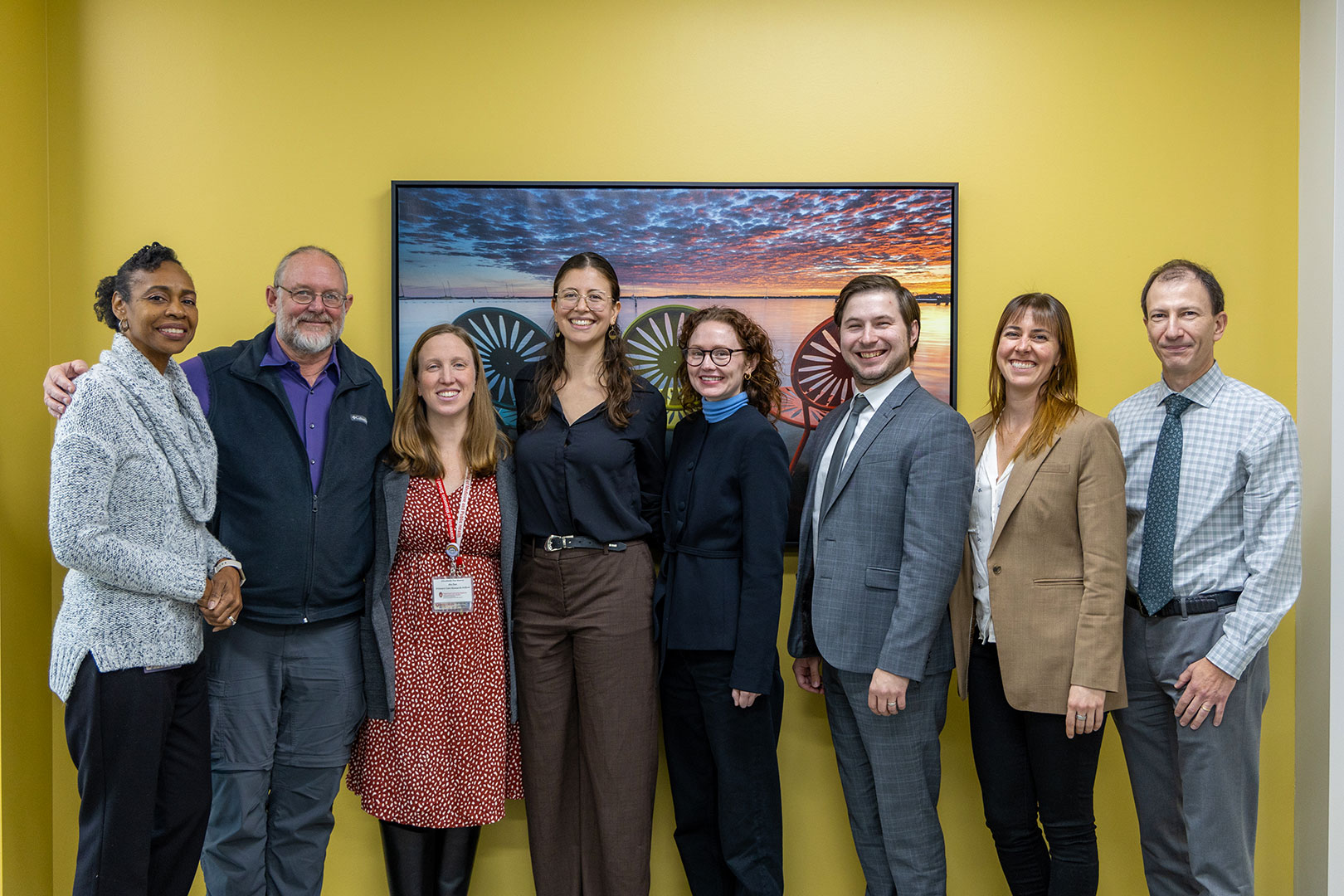
Apply now for the University of Wisconsin Primary Care Research Fellowships starting January 1 and July 1, 2027. Submit your application no later than November 1 for the January start date. Priority is given to July start date applications submitted by December 1, but applications are accepted through the spring. Interviews and admissions occur on a rolling basis. If positions remain available, the program will continue accepting applications until all positions are filled.
Primary Care Research Fellowship
The Primary Care Research Fellowship is a two- to three-year program providing intensive, mentored research training. Fellows develop core research skills, including grant and manuscript preparation, research ethics, and collaboration and relationship development. The program offers 100% protected research time and highly individualized, active mentorship.
This fellowship trains physicians and PhD scientists who are pursuing careers focused on the organization, delivery, and effectiveness of primary health care and preventive medicine to be future leaders in primary care research.
Since 1993, the program has trained more than 60 postdoctoral fellows through a continuously updated curriculum. It is one of the nation’s oldest and most successful primary care research fellowships.
The fellowship is funded by an HRSA Ruth L. Kirschstein National Research Service Award Institutional Research Training Grant. Grant funds support tuition and fees for relevant coursework, including additional certificates or degrees, as well as a portion of conference travel, workshops, and other training-related expenses.
The program is based in the University of Wisconsin Department of Family Medicine and Community Health. Fellows are mentored by a multidisciplinary team of faculty from the Departments of Family Medicine and Community Health, General Internal Medicine, and Pediatrics.
Program Snapshot
Program Length: 2-3 years
Start Date: January 1 OR July 1
Appointment Type: Postdoc
Accredited: No
Spots Available: 3 (max. cohort 5)
Moonlighting: Yes
On This Page
Application Info
Eligibility Requirements
You must:
- Hold a medical (MD, DO), doctoral (PhD), or other terminal degree at the time of appointment
- Be a U.S. citizen, a non-citizen national, or a lawful permanent resident
- Intend to pursue a career in primary care research
Application Process
- Review eligibility requirements and submit the following documents through our online application:
- Curriculum vitae
- Statement (approximately 500 words) describing your long-term professional plans and explaining how you see your fellowship experience contributing to your future professional activities
- Name and contact information for three references
Key Dates
Applications Open: October 1, 2026
Deadline to Apply: December 1, 2026 for priority consideration
Interviews: Rolling
Start Date: January 1 or July 1, 2027
Curriculum Highlights
- Clinical
- MD and DO fellows may continue a primary care practice at up to 25% FTE at one of UW Health’s four residency clinics. These include a Federally Qualified Health Center (FQHC) and a rural practice setting.
- Fellows in other disciplines (e.g., PhD, RN) may practice or consult at up to 25% FTE.
- Research
- Fellows receive mentored research training designed to prepare them for academic careers in primary care medical research.
- Fellows are expected to maintain one to two active research projects that align with primary care research priorities leading to peer-reviewed publications.
- The program provides opportunities and support for applying for institutional and external research grants.
- Dedicated writing groups support manuscript development, grant applications, job applications, and other scholarly writing.
- Mentorship
- Each fellow is assigned a fellowship director as a primary mentor.
- Fellows also have a designated primary research mentor.
- Fellows are encouraged to engage two to three additional mentors to support their research, career, and professional development.
- Mentor–mentee relationships are reviewed and evaluated annually.
- Education
- A structured curriculum featuring weekly seminars led by UW–Madison faculty and researchers focusing on career development topics such as grant writing, publishing, mentoring, and other skills relevant to early-career researchers.
- Biannual symposia where fellows present their research in a conference-style setting attended by peers, faculty, staff, and mentors.
- An annual NIH grant-writing course.
- Opportunities to earn a certificate through the UW Institute for Clinical and Translational Research (ICTR) in Fundamentals of Clinical Research or Implementation Science & Community Health Outcomes, aligned with National Institutes of Health workforce priorities.
- Tuition support for relevant coursework or to pursue a master’s or doctoral degree.
Program Leadership and Team
Department of Family Medicine and Community Health


Current Fellows
Benefits


Moonlighting opportunities

Paid parental leave
Primary Care Research Fellowship positions are offered through UW–Madison or as dual employment positions with UW Health. Salaries comply with the NIH National Research Service Award (NRSA) postdoctoral fellowship rates and are based on years of experience.
Life In Madison
Sponsor
The University of Wisconsin Primary Care Research Fellowship Program is supported by the Health Resources and Services Administration (HRSA) of the U.S. Department of Health and Human Services (HHS) under grant number T32HP10010, National Research Service Award in Primary Care Medicine, in the amount of $451,580, financed 100 percent with federal funds and 0 percent with nongovernmental sources.